

Tutorial · Music
Write a backbeat you can hear from a sixteen-square grid
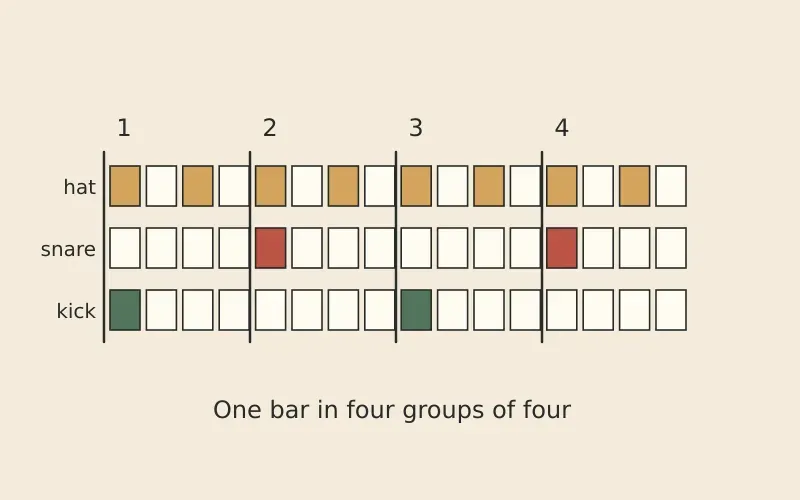
The first square in each group of four is a main beat. Sixteen squares give you room for everything between them.
See the toolsTools for this guide
Shopping region · AU
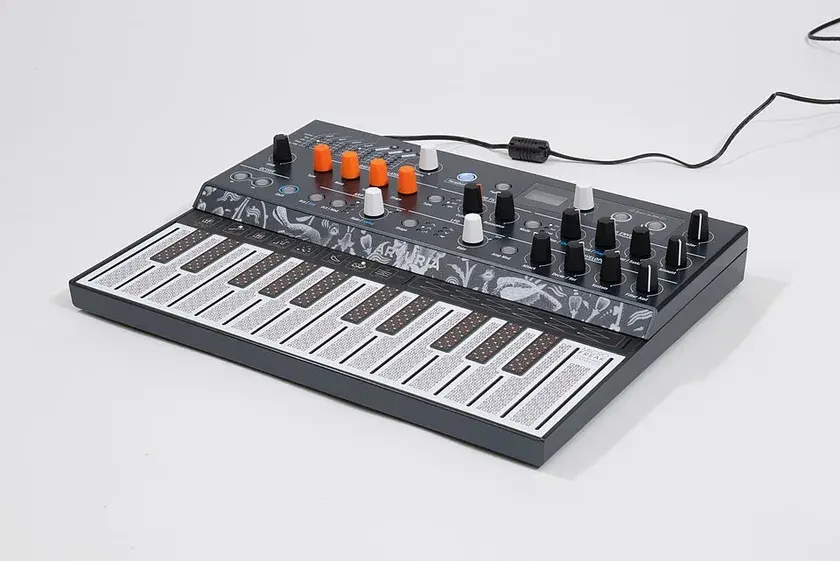
Arturia MicroFreak hybrid synthesizer
Original product · international listings No priced listing in this selection.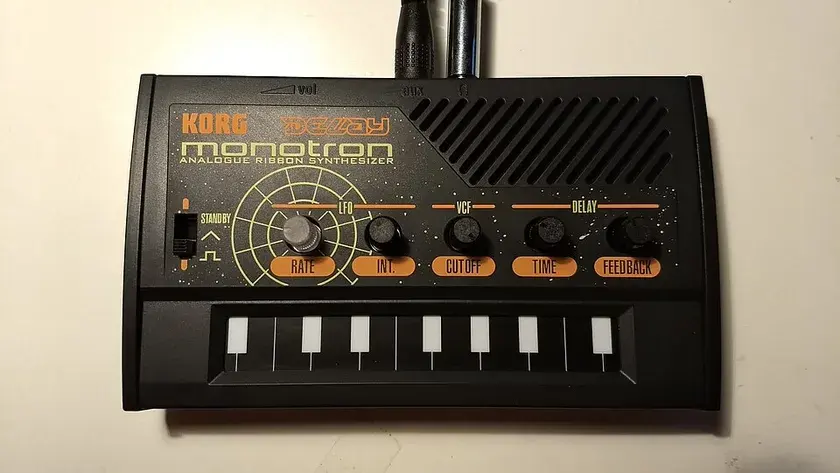
Korg monotron DELAY pocket synthesizer
$109 AUD · Store DJ (AU) ↗Estimate this combination
Uses dated prices in one market and currency. Shipping and taxes can change the total.Step by step · 4
What to gather
- squared paper
- two colours of pen
- optional browser drum sequencer
Make three rows of sixteen squares. Put bold separators after squares 4, 8 and 12, then label the starts of the groups 1, 2, 3 and 4.
On the kick row mark squares 1 and 9. On the snare row mark 5 and 13. This puts the snare on beats two and four.
On the top row mark the odd-numbered squares for a repeated hi-hat sound. Tap that steady pattern while listening to the kick and snare.
Add a quiet kick before the last beat or leave out one hi-hat. Play the original and the revision at the same tempo and listen to the difference.
Use what you have · budget alternatives
Use thigh taps for kick, a handclap for snare and a spoken “tss” for the hi-hat. A browser sequencer lets you hear all three rows together.
More about this discovery
A one-bar pattern you can tap with your hands or enter into a step sequencer.
Counting in groups of four helps you see why step five lands on the second main beat.
Editorial sources
From this discovery