
Visual idea · Reading
The landscape hidden in the edge of a closed book
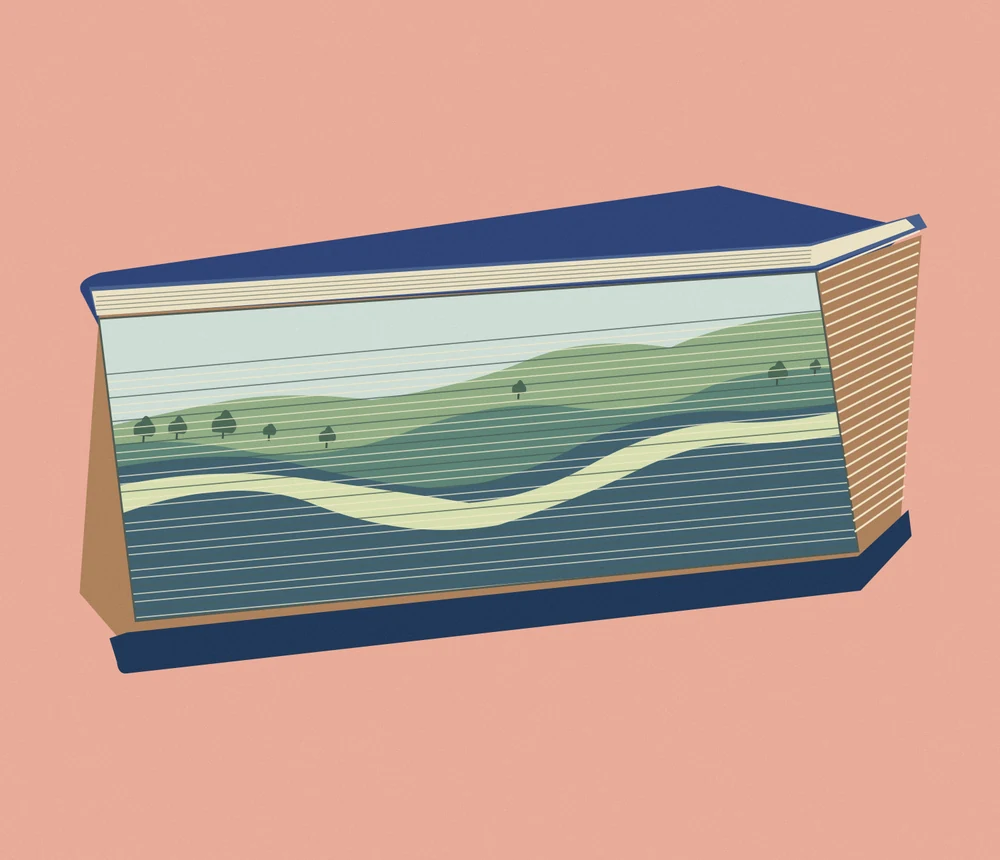
One volume of Shakespeare’s plays looks gilt-edged on the shelf. Fan its pages in the Folger’s photographs and Wilton House appears, complete with grounds and water.
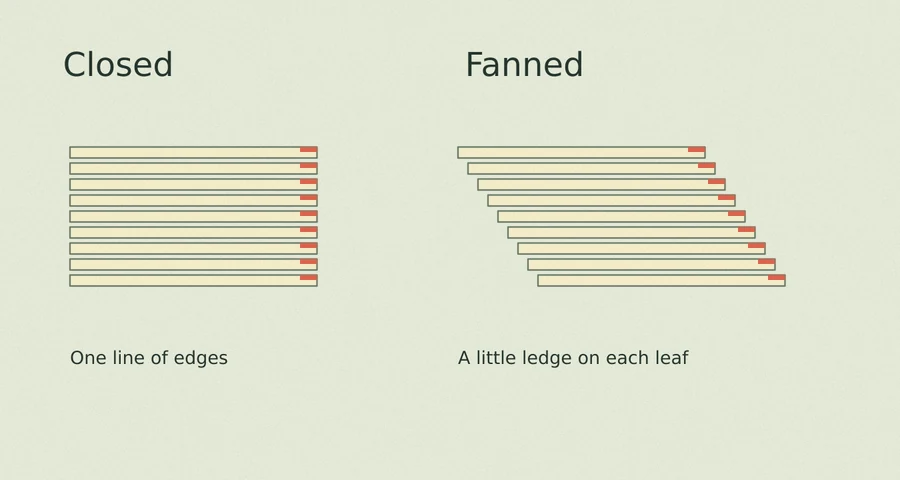
The shape of the book does some of the painting. A slight fan exposes a strip of each leaf beside its neighbours. A line drawn across those strips reads as a single image from that angle. When the book closes, they retreat behind the edge.
The how-to
Step by step.
What to gather
- The Folger’s closed and fanned photographs
- A small stack of uncoated scrap paper, a clip and a coloured pencil for the optional model
Open the Folger’s photo pair. Start with the closed book, then return to Wilton House. Look at the edge opposite the spine and pick one shoreline or roofline to follow across the leaves.
Stack two dozen or so scrap sheets together. Slide each a little farther than the one below until their edges form a narrow staircase. Clip the stack at its other end. Draw a broad diagonal in coloured pencil across the exposed strips.
Square the sheets, put them in a paper band and write “Slide these edges to the left” or “to the right”, whichever restores your drawing. Your plain-paper model may still show flecks when closed. The Folger volume has a gilt edge that conceals much more.
Editorial sources
From this discovery