

Visual idea · Making
Follow the seams of a Korean wrapping cloth
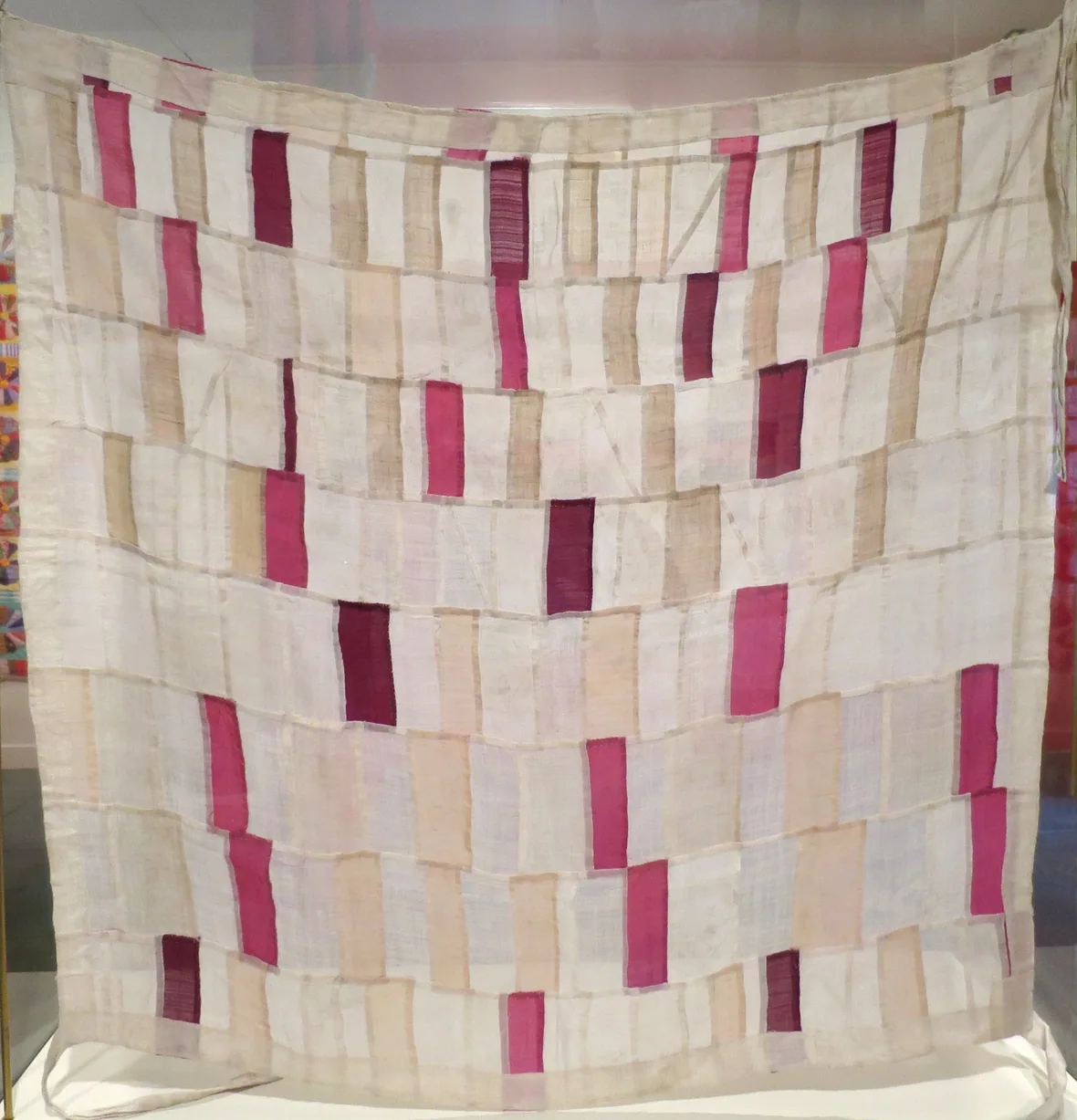
A narrow strip of pink changes an entire field of pale hemp. Trace the seams in this jogakbo, then lay out a wrap using the fabric scraps you have.
Tradition from South Korea · The Metropolitan Museum of Art · a Korean jogakbo and its uses
Museum collections trace this Korean patchwork practice to an era before the Korean peninsula’s present borders. The photograph shows a twentieth-century Korean wrapping cloth now in Honolulu.
Bojagi is a Korean wrapping cloth. A jogakbo is pieced together from smaller pieces. The hemp example pictured belongs to the Honolulu Museum of Art. The Met and the Asian Art Museum show other examples, so you can compare the same idea in different hands.
The how-to
Step by step.
What to gather
- Small fabric offcuts or cut paper
- A small box or book
- Pencil and paper
Start at a red or pink strip in the photograph. Follow it to the first cross seam. Notice which line continues and which stops. Sketch just that junction on paper.
Arrange three or four fabric offcuts next to one another. Try shifting one narrow piece off-centre. Photograph the arrangement before sewing so you can compare it with your next version.
Lay the pieces out again around the book or small box you intend to wrap. Make sure the corners can meet. Pencil in the join lines, allowing extra material for your seams.
Editorial sources
From this discovery