



Visual idea · Travel
Why the paving changes from lines to dots
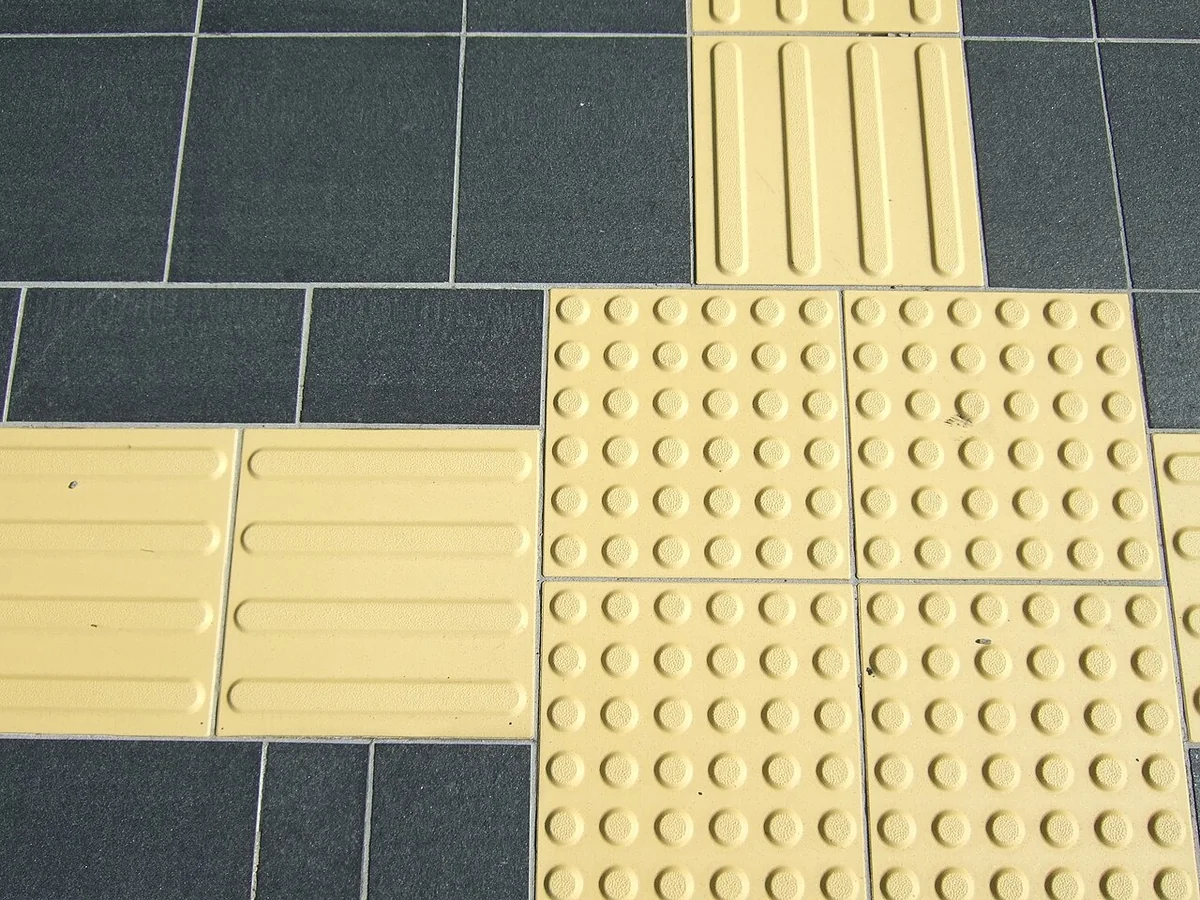
A band of raised bars meets a patch of raised dots. The change carries information through a shoe or cane. One of the first places to see its history is the Haraoshima crossing in Okayama.
Try it yourselfStep by step · 3
On a Japanese example, look for parallel ridges running along the direction of movement and a field of dots marking an attention point. The junction between the surfaces is more informative than the colour alone.
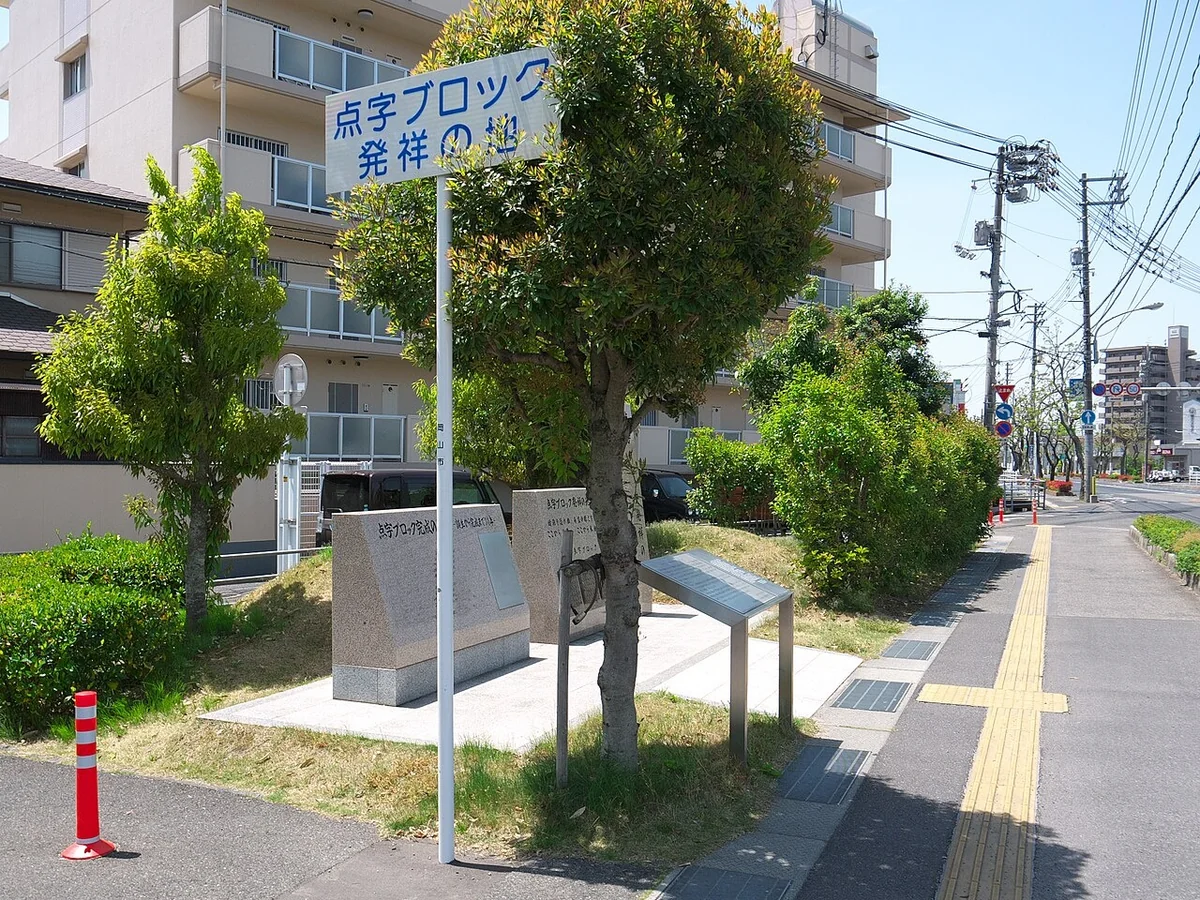
Look up the birthplace marker at Haraoshima, Okayama. The original installation was near a school crossing. The marker and present-day paving are visible from the side of the route.
If you stop for a photograph, stand to the side and keep luggage and bicycle wheels off the raised strip. The patterns are infrastructure people use.
More about this discovery
Seiichi Miyake developed tactile paving in Japan. Okayama City records its first installation near the prefectural school for blind students in 1967. A marker at the Haraoshima intersection connects that design history to an ordinary street corner.
Local notes & practical details
Invented in Japan · Okayama, Okayama Prefecture · Okayama Prefecture · Miyake’s invention and the first installation
The prefecture credits Seiichi Miyake with the 1965 design and locates the first installation in 1967 near the Haraoshima crossing in Okayama City.
Editorial sources
From this discovery