

Design study · Kitchen
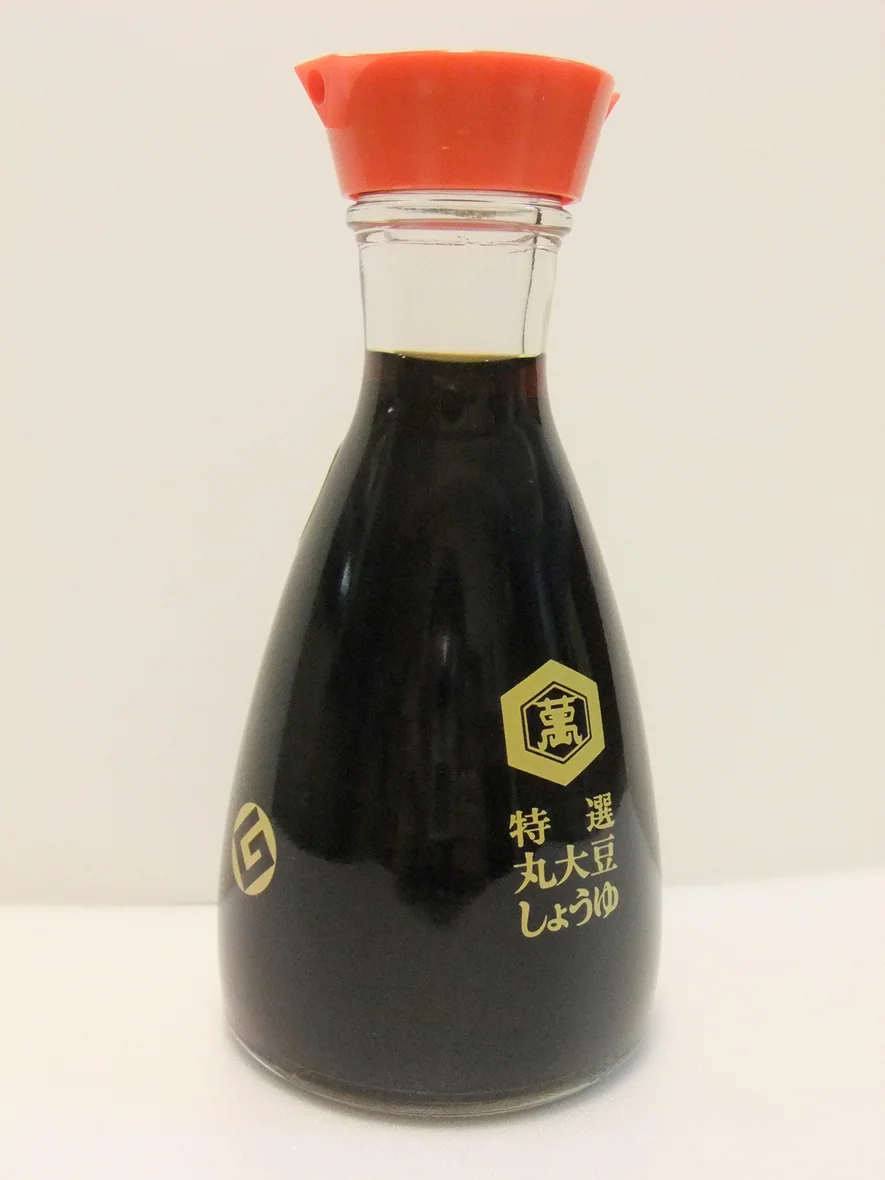
Why the Kikkoman tabletop bottle has two spouts
The second opening in the red cap gives you a way to control the pour. Kenji Ekuan and GK Design Group turned a working detail into one of Japan’s most recognisable kitchen objects.
Designed in Japan · MoMA · Kikkoman dispenser, 1961
MoMA credits the 1961 dispenser to Kenji Ekuan and GK Design Group and identifies Kikkoman Corporation in Japan.
Kikkoman introduced the dispenser in 1961. The glass body steadies the bottle on a table while the narrow neck fits the hand. To understand the cap, watch the other opening while the soy sauce pours.
The how-to
Step by step.
Look at the red cap from above. There is an opening on either side. Use the traditional two-opening dispenser for this exercise; squeeze bottles have a different mechanism.
Tip one opening toward a small saucer. Briefly cover and uncover the opposite opening to compare a restricted pour with a freer one. Kikkoman’s short demonstration shows the difference.
Look at the 1961 design in MoMA’s collection, then at the front of the Japanese-market bottle pictured here. Read the label separately from the shape: the sauce sold inside a dispenser varies by market.
Editorial sources
From this discovery