
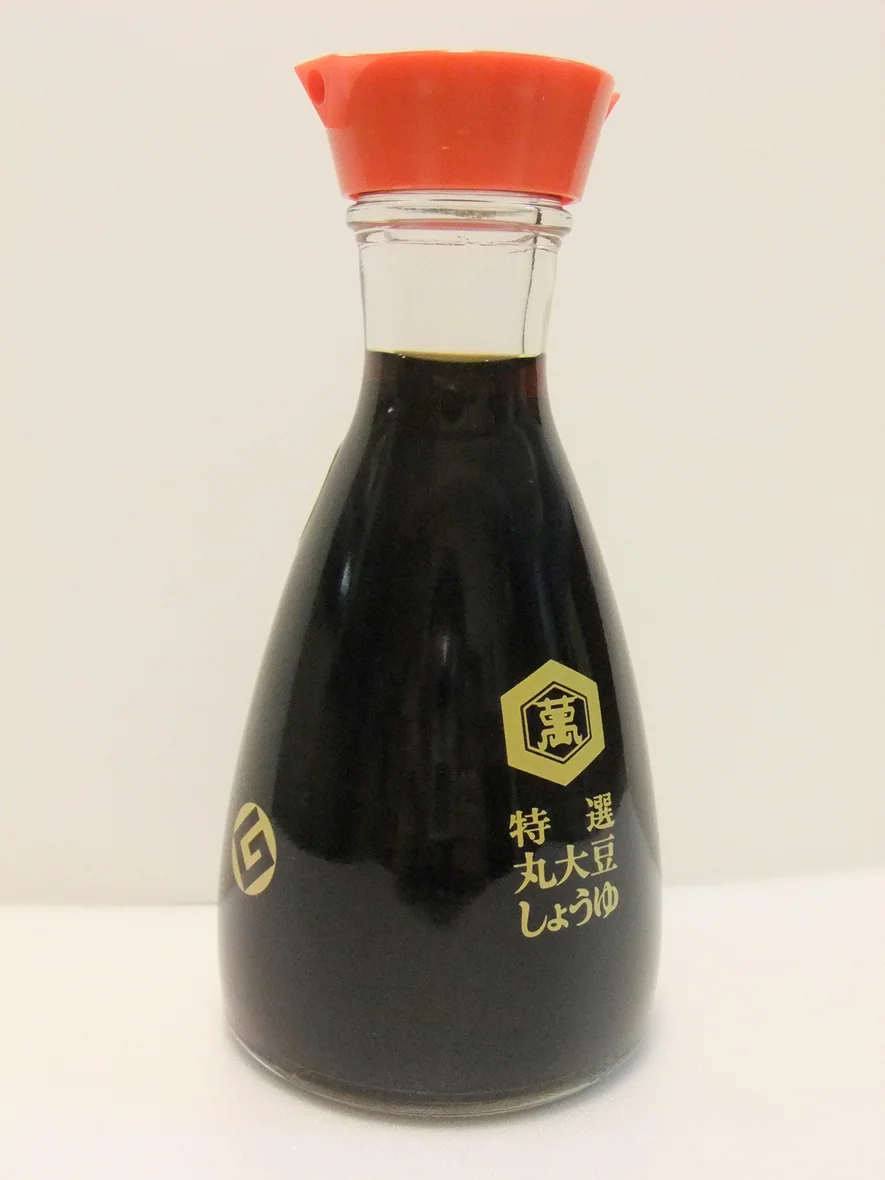

Design study · Kitchen
Why the Kikkoman tabletop bottle has two spouts
The second opening in the red cap gives you a way to control the pour. Kenji Ekuan and GK Design Group turned a working detail into one of Japan’s most recognisable kitchen objects.
Try it yourselfStep by step · 3
Look at the red cap from above. There is an opening on either side. Use the traditional two-opening dispenser for this exercise; squeeze bottles have a different mechanism.
Tip one opening toward a small saucer. Briefly cover and uncover the opposite opening to compare a restricted pour with a freer one. Kikkoman’s short demonstration shows the difference.
Look at the 1961 design in MoMA’s collection, then at the front of the Japanese-market bottle pictured here. Read the label separately from the shape: the sauce sold inside a dispenser varies by market.
More about this discovery
Kikkoman introduced the dispenser in 1961. The glass body steadies the bottle on a table while the narrow neck fits the hand. To understand the cap, watch the other opening while the soy sauce pours.
Local notes & practical details
Designed in Japan · MoMA · Kikkoman dispenser, 1961
MoMA credits the 1961 dispenser to Kenji Ekuan and GK Design Group and identifies Kikkoman Corporation in Japan.
Editorial sources
From this discovery