

DIY · Making
Count a Tsugaru kogin diamond, one row at a time
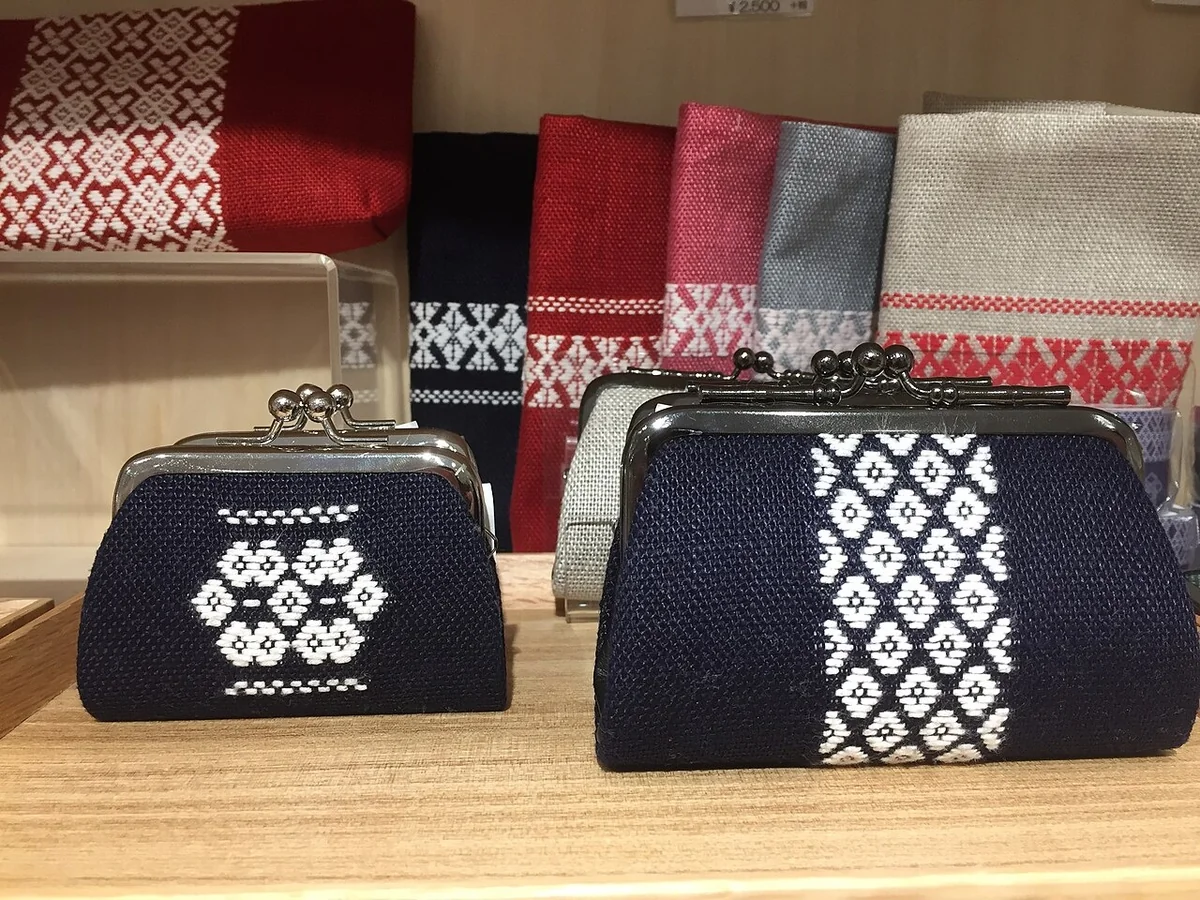
A dark purse with small white diamonds can look printed from a distance. Up close, each bright line crosses a counted number of threads in the ground cloth.


Tradition from Japan · Aomori Prefecture · Editorial source
Aomori Prefecture describes the counted-stitch tradition of Tsugaru, including Hirosaki.
Kogin-zashi grew out of workwear in the Tsugaru region of Aomori. Cotton stitching reinforced and warmed a looser hemp weave. In the tradition documented by Aomori Prefecture, the stitcher counts odd numbers of vertical threads. A tiny practice swatch lets you see what that count does.
The how-to
Step by step.
What to gather
- Squared paper and a pencil
- An even-weave fabric scrap, contrasting cotton thread and a needle
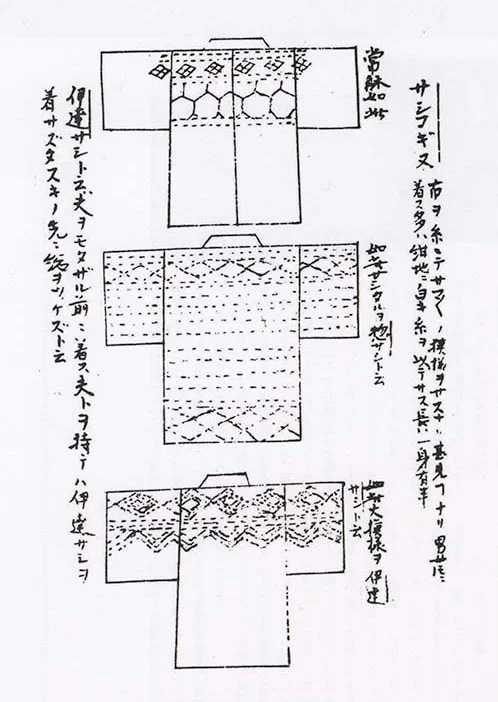
Mark five horizontal rows on squared paper. Centre runs of 1, 3, 5, 3 and 1 squares over the same central column. This small practice shape makes the count visible. You can study traditional patterns in the historical drawing below.
Use a scrap with a clearly visible even weave and a contrasting thread. Bring the needle up and take it down after crossing the number of vertical threads in the first row. Repeat for the next row, keeping the centre lined up.
Lay the sample flat before tightening any thread. If a side steps out, compare that row to the paper chart. If the diamond looks taller or wider on the cloth, compare the spacing of its warp and weft.
Editorial sources
From this discovery