Separate rinse and clean water
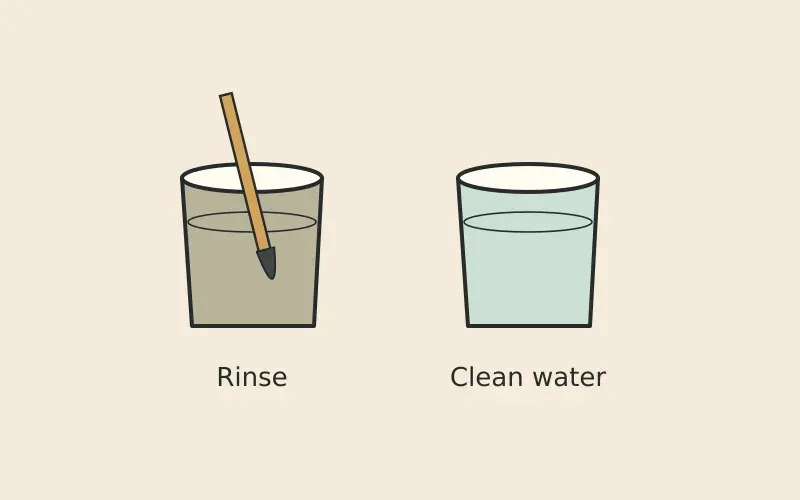
Rinse most pigment out in the first jar. Touch the brush into the second jar before returning to a pale colour, then test one stroke on scrap paper.
Solution · Art
A lemon-yellow patch can turn olive after one pass with a dirty brush. Trace where the unexpected colour entered.
See the approachesRinse most pigment out in the first jar. Touch the brush into the second jar before returning to a pale colour, then test one stroke on scrap paper.
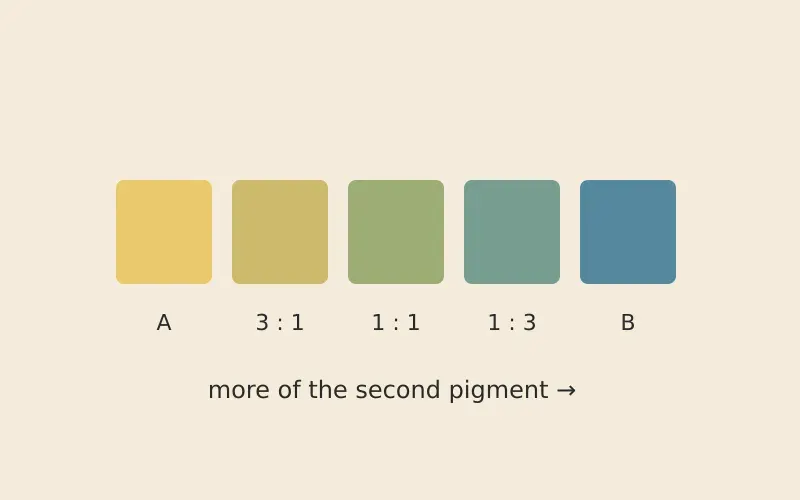
Lay down a pure spot of each paint with a row of three mixtures between them. Start from the light end, adding the darker pigment a little at a time.
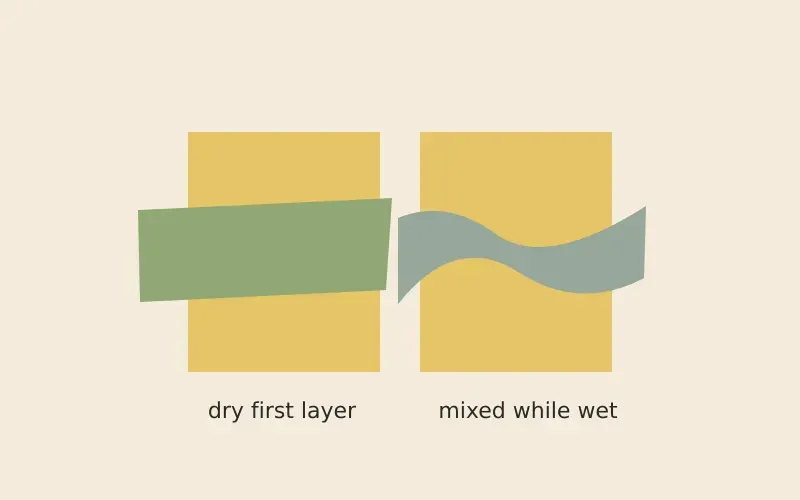
Paint a pale test rectangle and let it dry fully. Draw a single transparent stroke of the second colour across it without scrubbing. Compare it to a wet mix beside it.
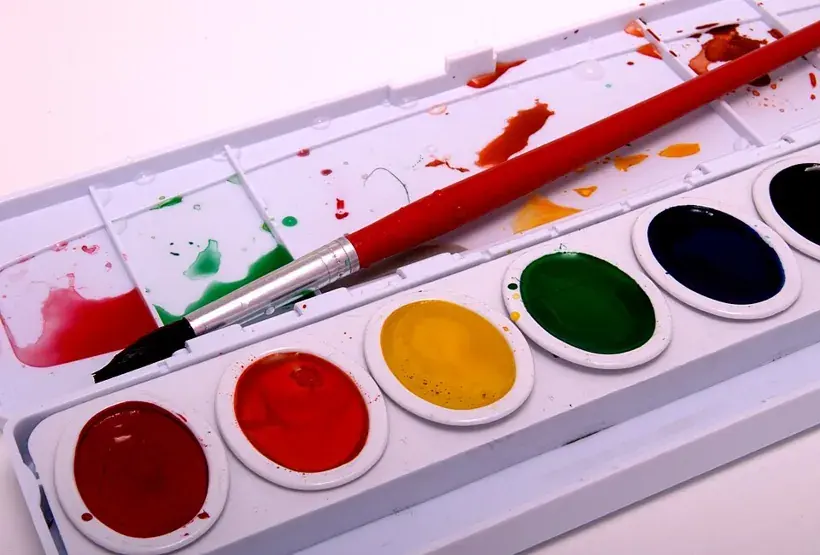 Watercolour kit example · reservoir brush at retailer
Paint a stripe of clean yellow or another pale pigment and leave it untouched.
Change the water, the amount of the second colour or the wetness of the paper. Compare with the control.
If the mixture is wrong, mix fresh paint on a clean patch of palette. More brushing on a damp area can lift the layer beneath.
Two drinking jars used only for painting and an offcut of your watercolour paper are enough.
A small comparison strip shows whether the brush, the palette or the timing caused the change.
Keep a paper strip next to the painting. A failed mixture there leaves the original sheet untouched.
From this discovery