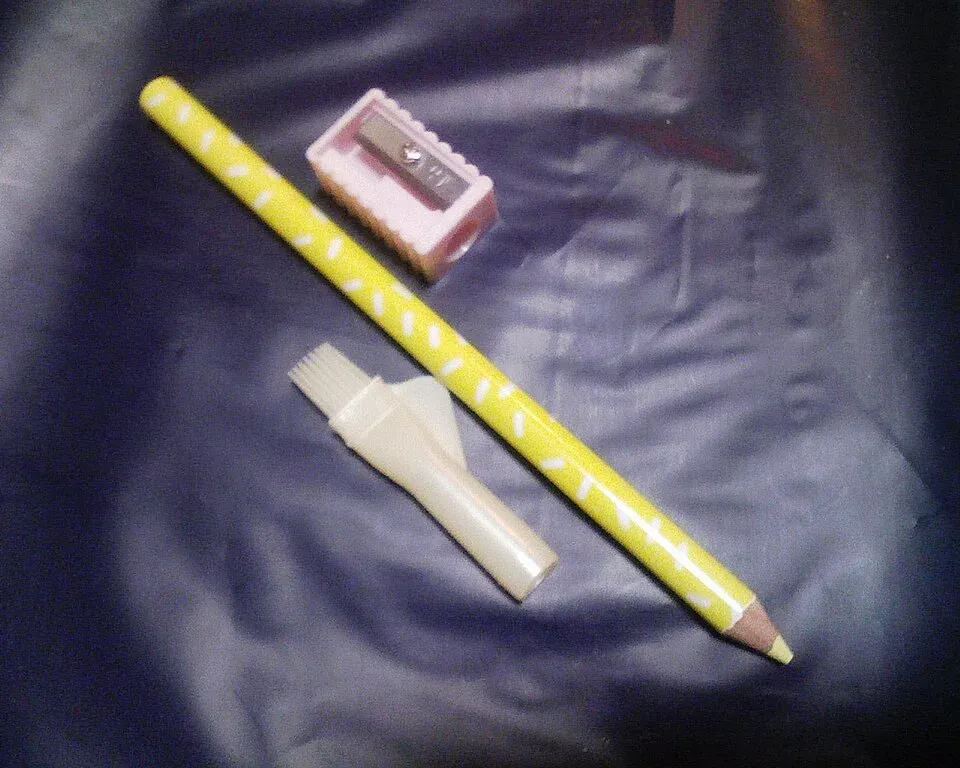

Chalk a simple outline
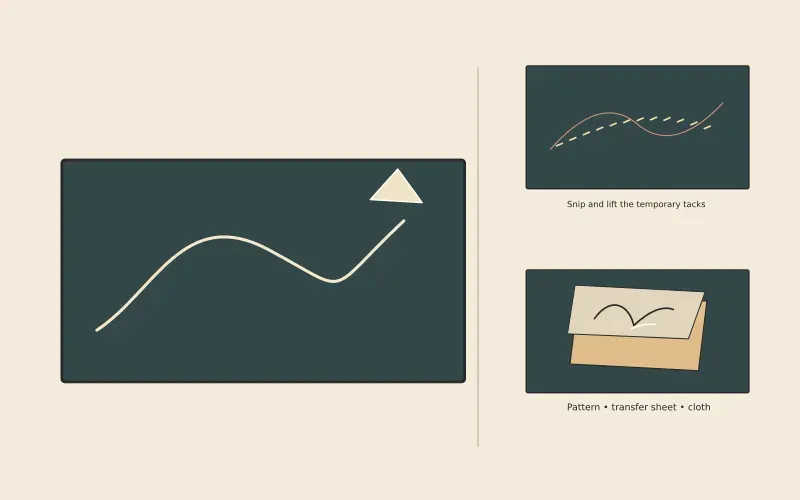
Draw a broken guide line with light-coloured tailor's chalk. Use a light touch and choose it for broad shapes that can tolerate the line wearing away.
Solution · Making
A dark pencil line can disappear as soon as the cloth goes into the hoop. Test the guide and how it comes off on the same fabric.
See the approachesDraw a broken guide line with light-coloured tailor's chalk. Use a light touch and choose it for broad shapes that can tolerate the line wearing away.
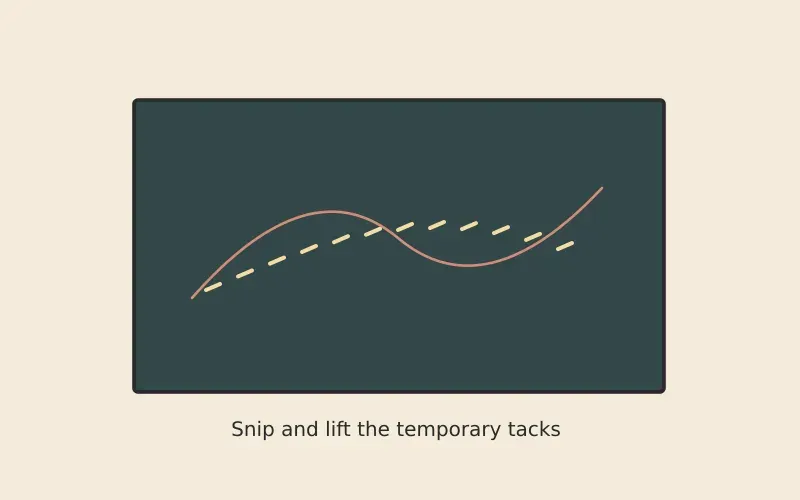
Run widely spaced basting stitches down a straight or gently curved guide. Work beside that line, then snip and remove the tacking in short sections.
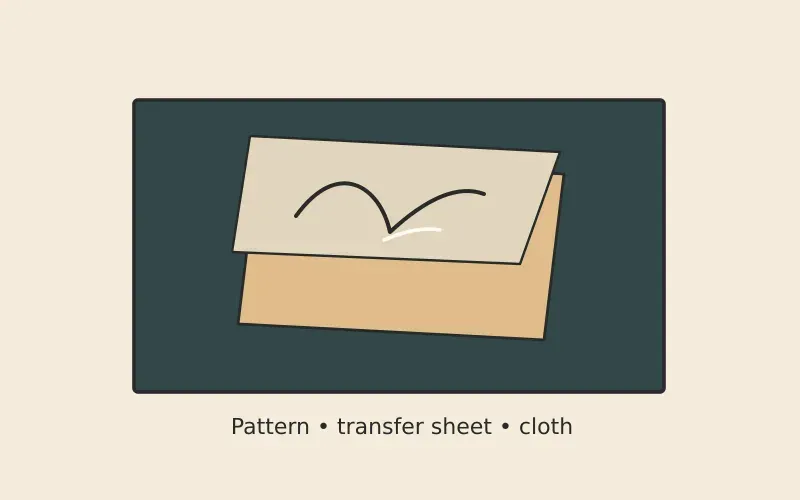
Place fabric-safe transfer paper colour-side down and trace over a simple drawing. Follow the paper maker's directions and try removal on a scrap before committing.
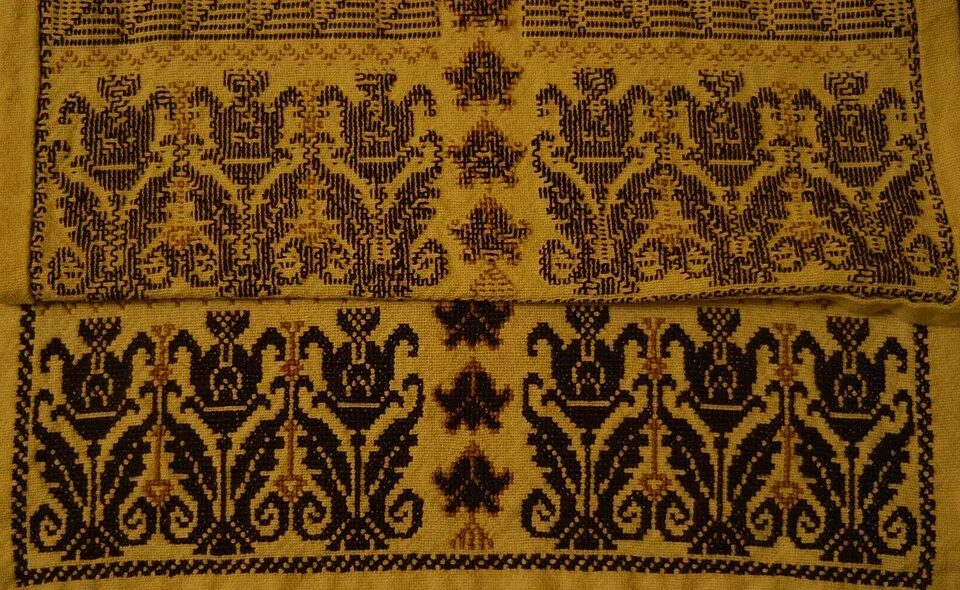
 Boro and sashiko repair example
Use the same fabric and thread as the final piece. Test both visibility and removal in the conditions the finished item will face.
Place just enough marks to guide direction changes. Avoid heavy lines where stitches will leave open fabric.
For thread guides, lift one short segment at a time. For marks, follow the specific product instructions before applying heat.
Light-coloured sewing thread from a spare kit can make a temporary tacking line with no marking product.
The stitched route stays visible while working and the temporary mark can be removed as intended.
Thread and chalk leave different kinds of evidence. Make a sample that includes a bare area as well as a stitched one.
From this discovery