Play one open practice turn
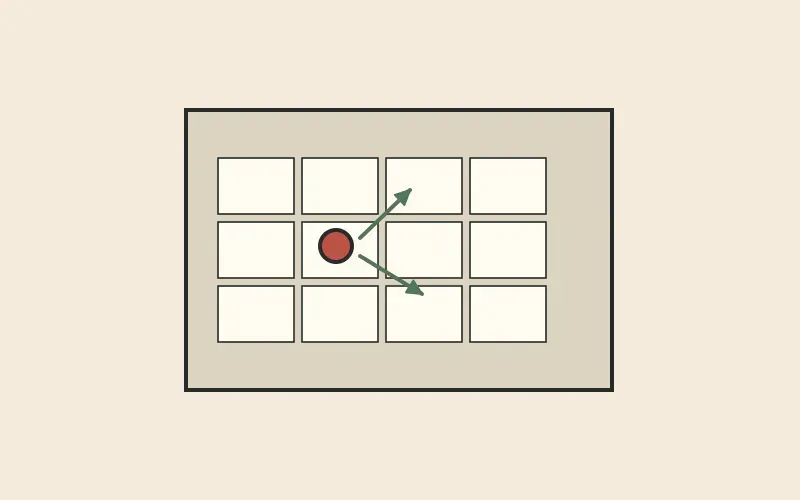
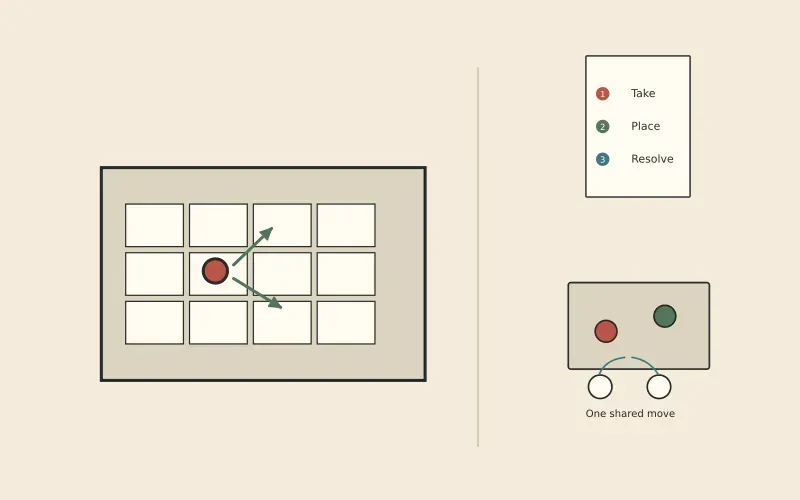
Using the real rules, show two legal choices from the same position. Let the new player pick one and resolve it together before restarting.
Solution · Family activities
Hand someone a page of rules at the table and they still may not know what a turn feels like. Begin at one real decision.
See the approachesUsing the real rules, show two legal choices from the same position. Let the new player pick one and resolve it together before restarting.
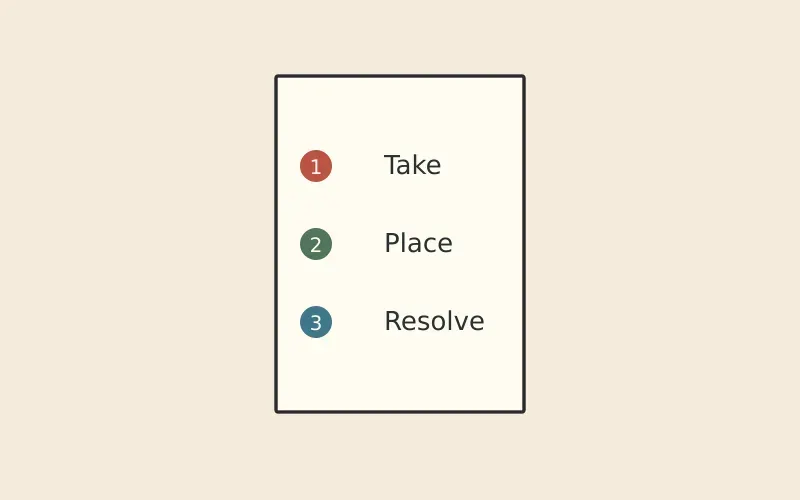
Put the three or four ordinary turn actions in order on a card. Keep rare exceptions in the rulebook and read the card during the first round.
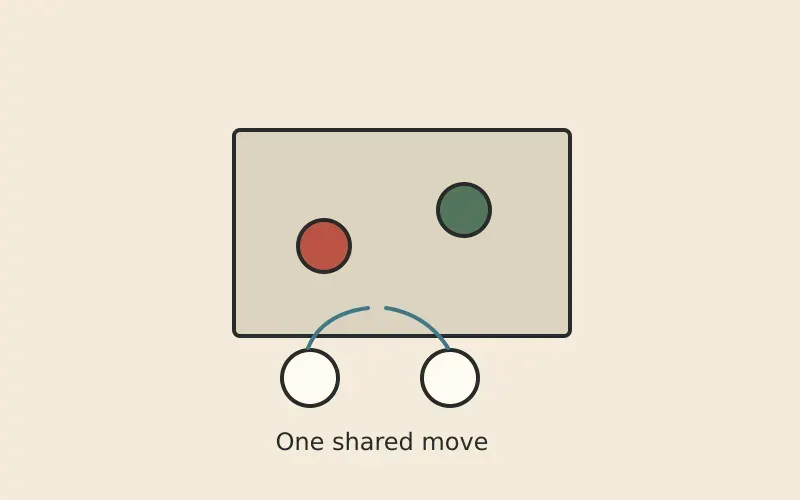
Have a newcomer and a returning player share a seat when the rules allow teams or a teaching round. Let the new player handle pieces and speak the final choice.
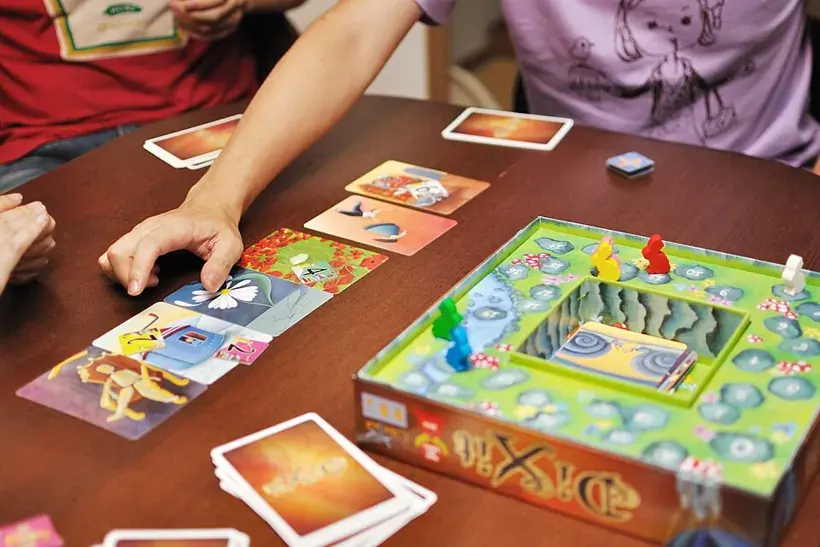 Dixit in play · artwork varies by edition
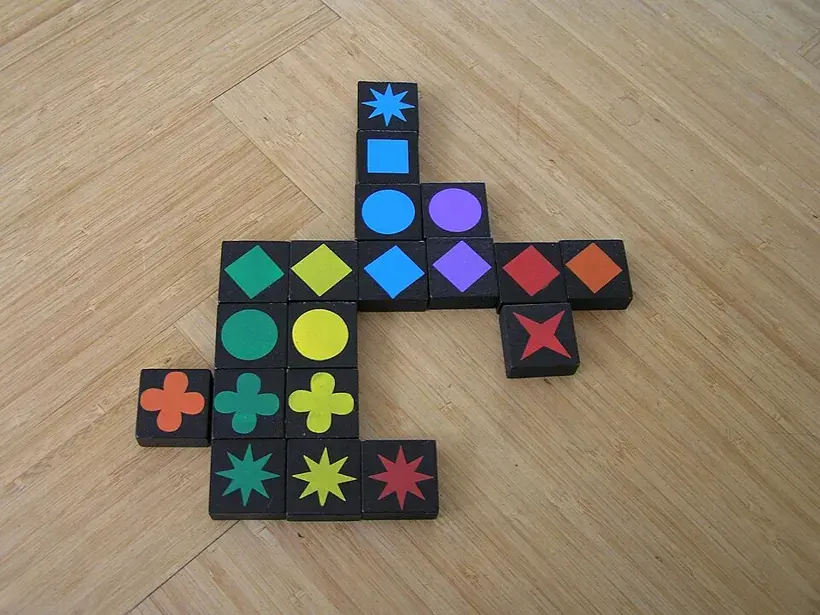
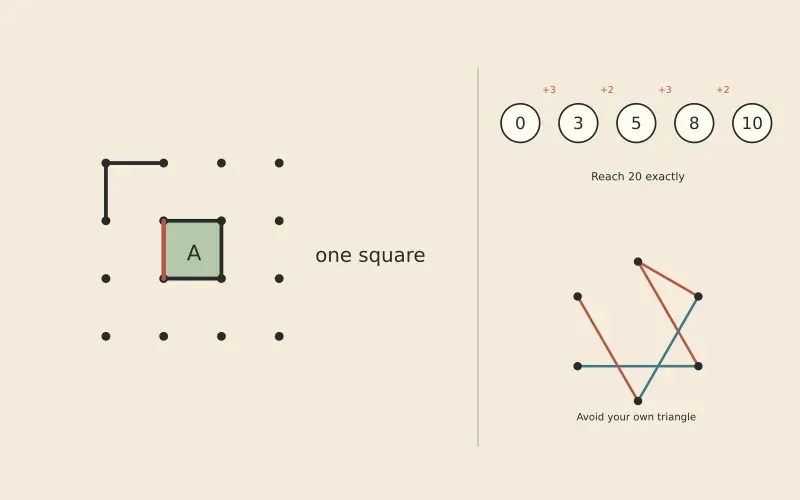
Say what ends the game and what counts as doing well in one sentence.
Introduce only the pieces and options that affect the example move.
After the example, let the table agree whether to reset or carry the practice position forward.
Use any familiar game you own and the back of a used envelope for the turn card.
The newcomer can make a legal move, see what it changes and decide what to try next.
An open practice hand is particularly helpful in a game where hidden information otherwise makes choices hard to explain.
From this discovery