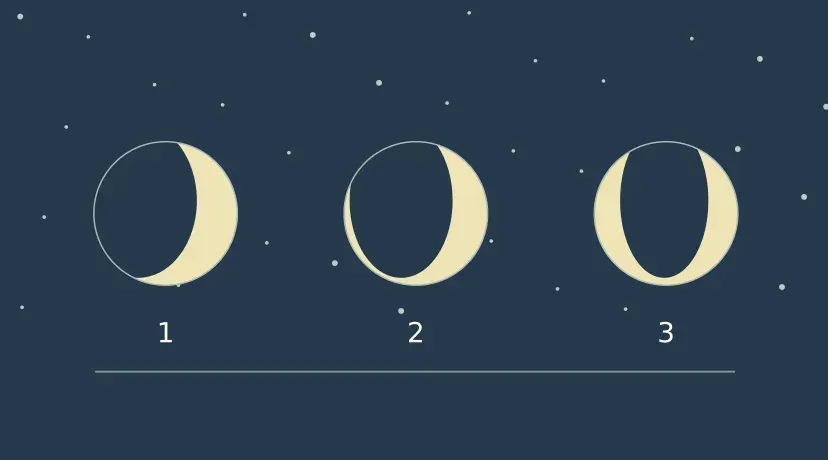
Fix the horizon
Add a little horizontal reference or landmark and draw the bright side as it appears above it.
Solution · Astronomy
Keep the size and orientation steady between sketches. After several nights, the changing shape of the lit part is easier to see.
Start the stepsUse a window or an outdoor spot where you can look up comfortably.
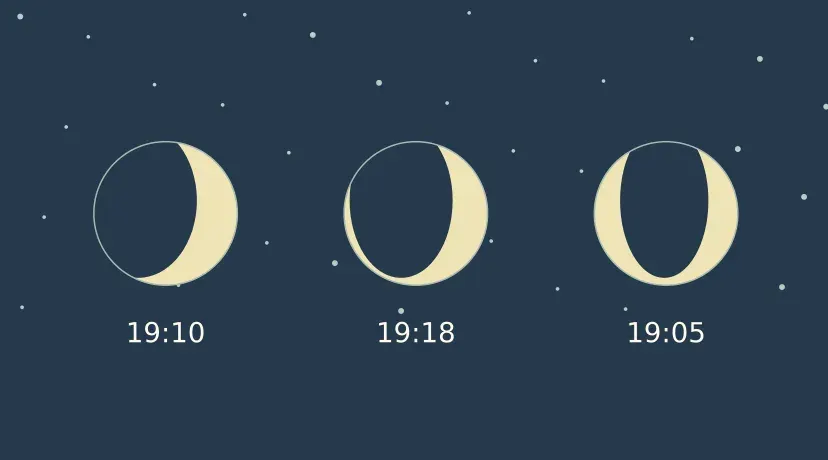
Place the circles in date order and describe which edge changed relative to the earlier sketch.
Keep the local observing place with the page so another viewer can interpret the orientation.
Add a little horizontal reference or landmark and draw the bright side as it appears above it.
Trace the same lid each evening. Shade the dark region before trying to reproduce small surface marks.
Write local date and time by each circle. Mark a cloudy or missed night honestly instead of completing it from memory.
Trace round a jar lid to make a page of matching circles.
Keep the circle size, observing orientation and time notes visible.
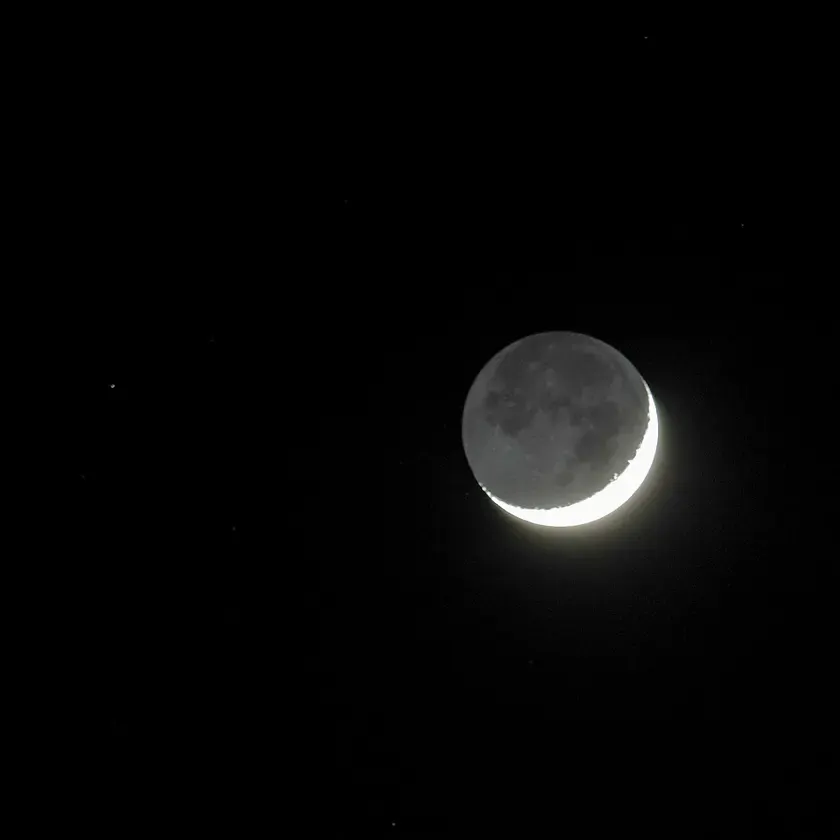
The illuminated portion changes over successive nights, and its apparent tilt also depends on your viewpoint and time.
From this discovery