For soft packets
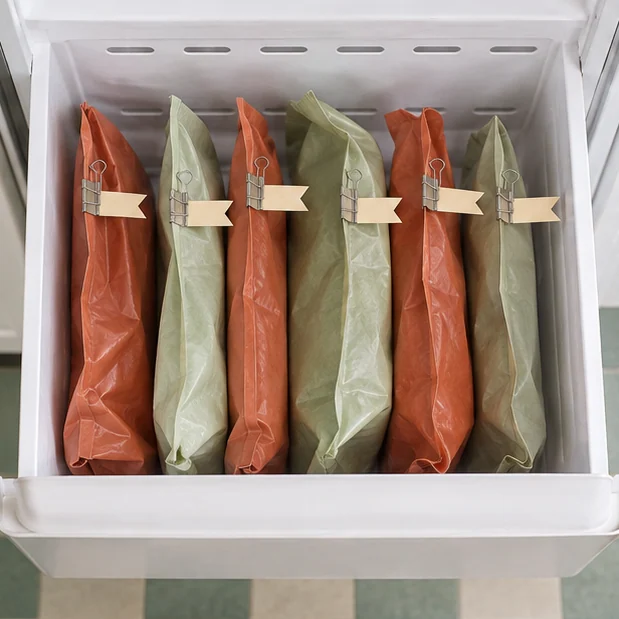
Place packets in a row they can support together. Put the short identifying name on a visible upper corner.
Solution · Kitchen
A label on the face of a frozen packet disappears when the packets stand in a row. Put a second short identifier on the edge you can see.
Start the stepsOpen it and look straight down from your normal position. Pick a small group of already sealed packets with readable original names or dates. Keep those original labels in place.
Copy the name and any existing date onto a freezer-suitable label at the top outer seam. Leave the seal, printed directions and date legible. Use only details you can identify.
Arrange packets in short rows such as meals and ingredients. Close and reopen the drawer. Choose tonight’s packet by its edge label and see if you can put the neighbouring packets back with one hand.
Place packets in a row they can support together. Put the short identifying name on a visible upper corner.
Keep a lid label and add the same name to the side visible when the drawer opens.
Draw a simple row map on the outside and change it as portions leave the freezer.
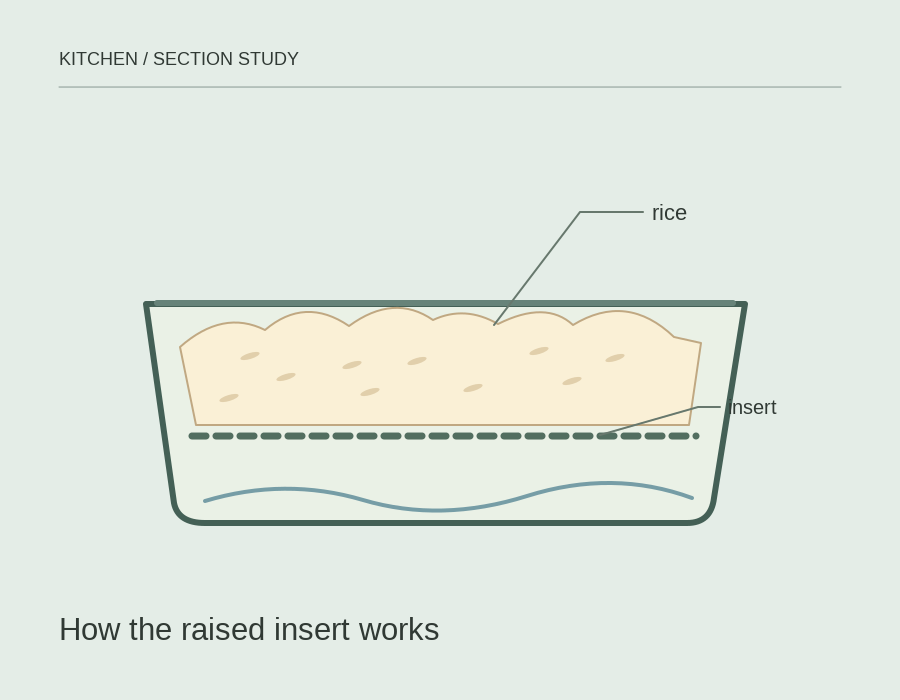 Explanatory diagram
If adding labels is awkward, draw two or three rows on scrap card, write the known contents in their current order and keep the map outside the drawer.
Try one packet first Use a marker or freezer label you already own on the outer packaging, or note the packet’s position on the outside of the drawer. Find it again from above before labelling more.
Copy the name of one known packet onto its visible upper edge, then file it upright in a row you can read from the open drawer.
From this discovery