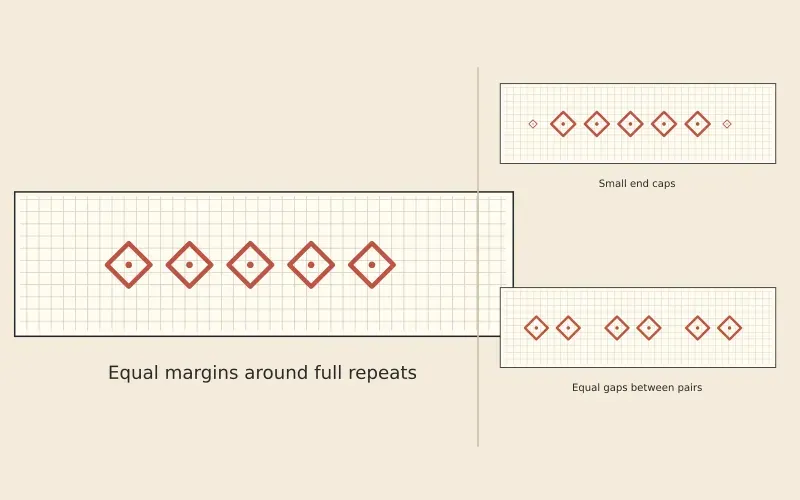
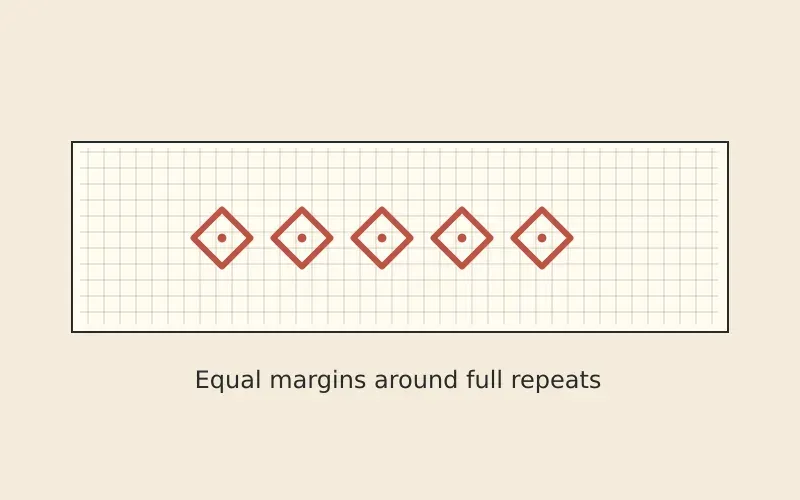
Centre whole motifs
Count how many complete repeats fit. Split the leftover spaces between the two ends, with a one-space difference where the remainder is odd.
Solution · Making
A repeating motif can run out of space halfway through its last diamond. Count the available intervals before stitching.
Start the stepsOne repeat runs from a point in the motif to the same point in the next motif. Count intervals rather than the dots at both ends.
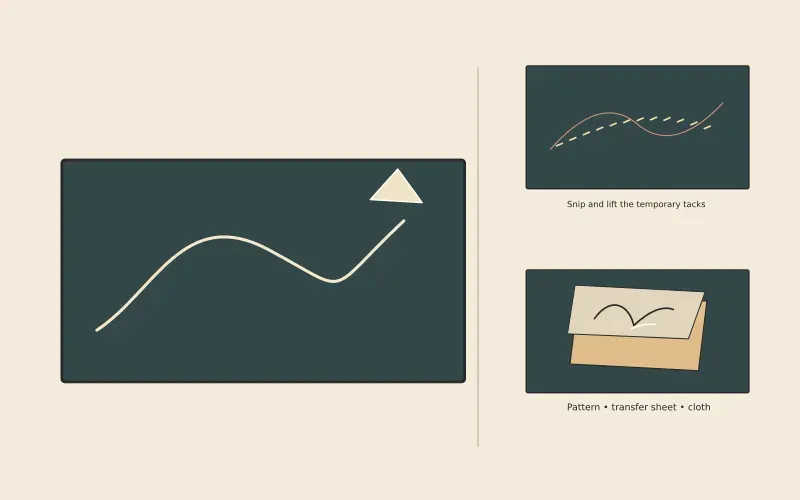
Fold the strip or make a temporary centre mark. Draw the motif sequence outwards on a paper grid.
Work two repeats on scrap at the intended scale. Confirm the visual gap before committing to the full border.
Count how many complete repeats fit. Split the leftover spaces between the two ends, with a one-space difference where the remainder is odd.
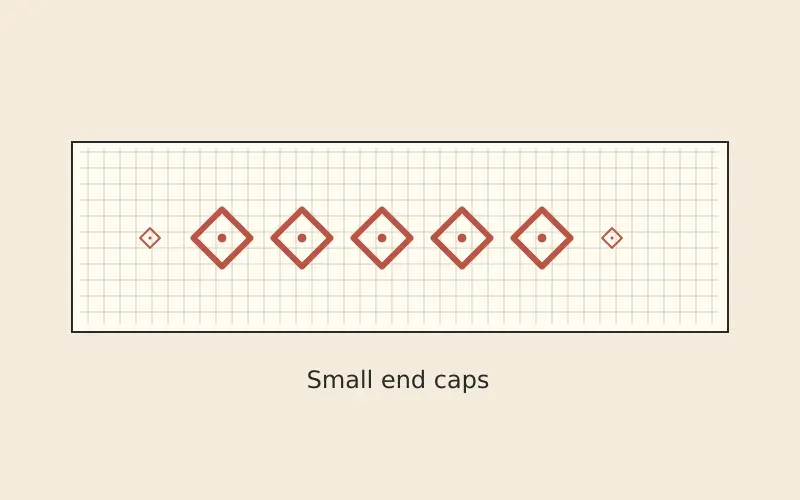
Fill the middle with complete motifs and finish with a single small diamond, dash or stitch at each end. Draw both caps on the paper pattern first.
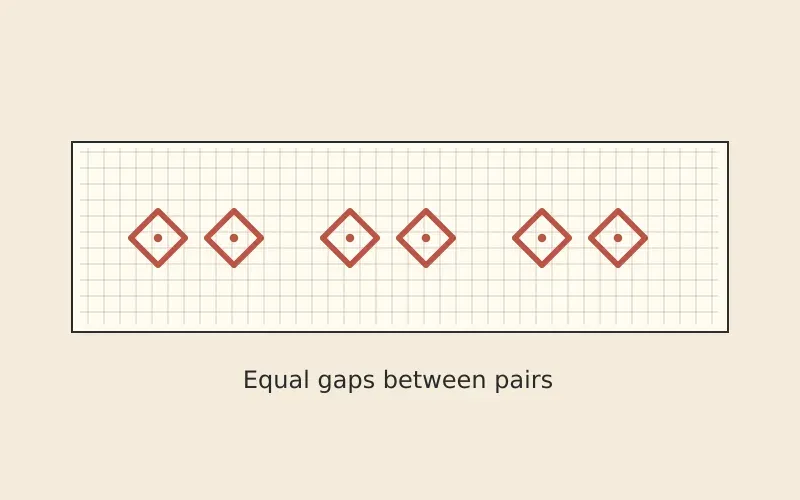
If several repeats fit, add an equal gap between groups and distribute any small remainder at the outside margins.
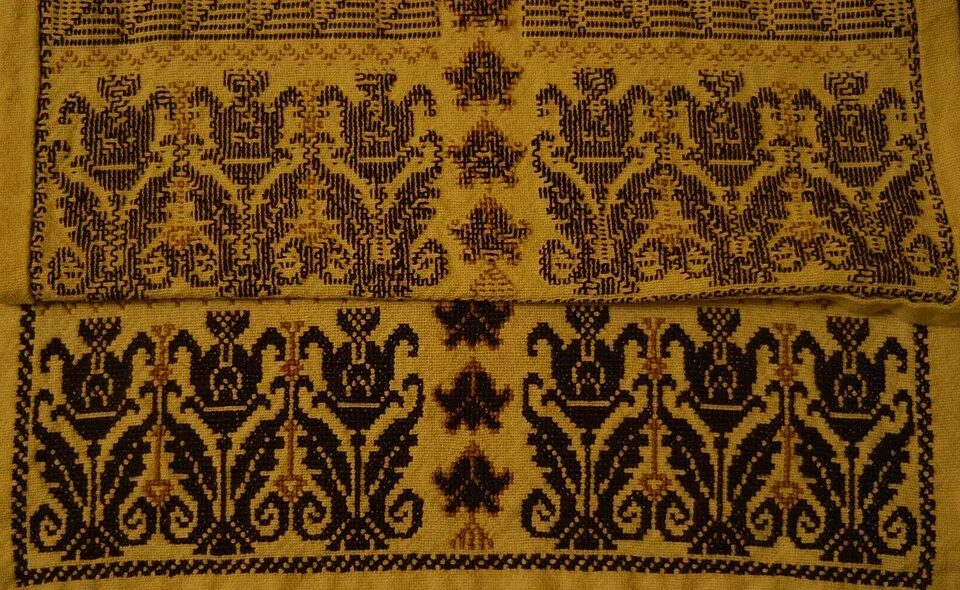
 Original print · see retailer for the stitched bookmark
Use squared exercise paper and the thread already chosen for the border. A ruler helps, but counted thread can supply its own grid.
The ends look intentional even when the full width does not divide evenly into the repeat.
In a strip of twelve stitch spaces, a five-space motif fits twice with one space left at each end.
From this discovery