
If the drawer is full
Lay the cutlery on a tea towel and put back a normal day's worth. An angled tray can help when the drawer has enough height.
Solution · Small spaces
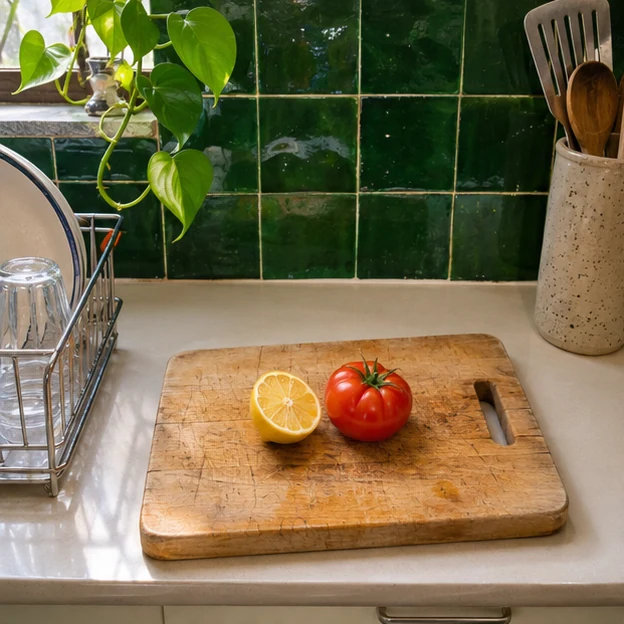
Use your chopping board to work out exactly which bit of counter you need back.
Lay your biggest chopping board where you like to prep dinner. Move everything underneath its outline. That rectangle is the patch worth protecting.
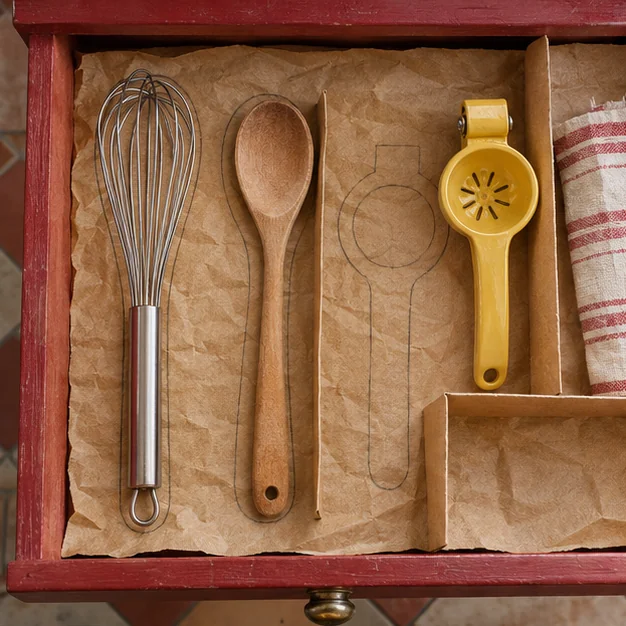 See it in practiceDraw the inside of your drawerSee the three steps
Lay the cutlery on a tea towel and put back a normal day's worth. An angled tray can help when the drawer has enough height.
Stand boards and baking sheets on edge inside an existing cupboard. Put a bookend beside them and check that they lift out separately.
Leave just the items you use while washing there. A brush that rests on the sink rim can free its holder's footprint.
The how-to
Make something familiar. Each time you shift an object to reach a pan, wash a vegetable or chop an onion, put a scrap of paper beside it. Start with the spot that collects the most scraps.
Keep knives and boards near prep, wooden spoons near the hob, and the washing-up brush by the sink. Move occasional tools to a higher shelf so each drawer does one job.
Measure the inside of the drawer, including its height. Trace a prospective organiser on scrap card and try closing the drawer over it before you order.
Suggested products for this discovery. Choose the items you still need.
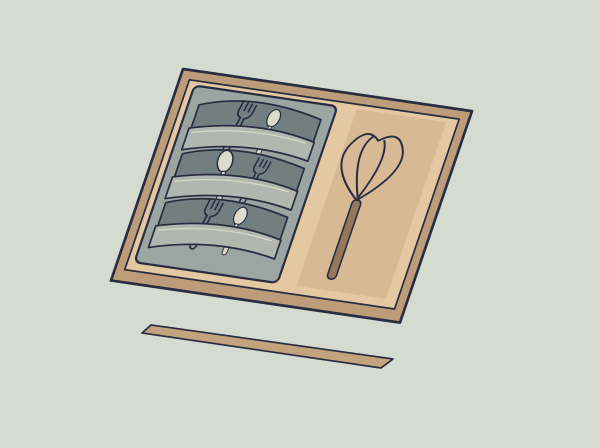
Overlapping angled compartments use height to free up drawer width
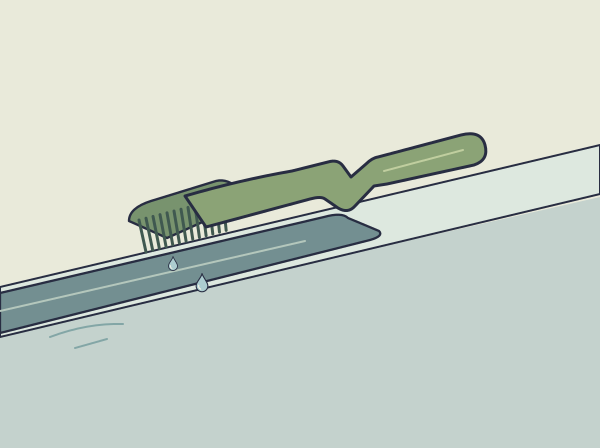
The grip doubles as a sink-edge rest
From this discovery