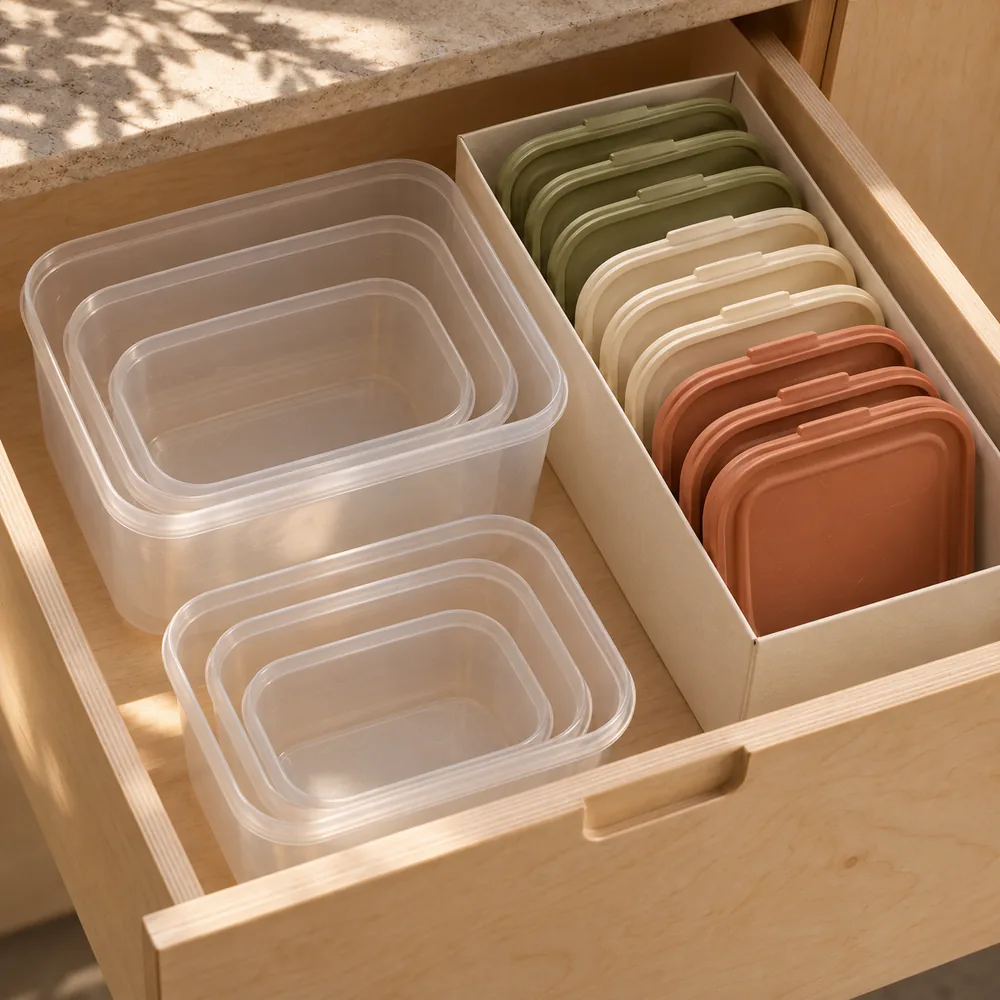
If the drawer is full
Lay the cutlery on a tea towel and put back a normal day's worth. An angled tray can help when the drawer has enough height.
Make a drawer templateSolution · Small spaces
Use the space taken by one familiar meal to decide which patch of counter to clear. The board you chop on and the pan you reach for are better measures than an empty-room photograph.
Start the stepsMake something familiar. Each time you shift an object to reach a pan, wash a vegetable or chop an onion, put a scrap of paper beside it. Start with the spot that collects the most scraps.
Keep knives and boards near prep, wooden spoons near the hob, and the washing-up brush by the sink. Move occasional tools to a higher shelf so each drawer does one job.
Measure the inside of the drawer, including its height. Trace a prospective organiser on scrap card and try closing the drawer over it before you order.
Check the resultYour usual chopping board lies flat. You can reach the pan you need without moving another object off the counter.
Lay the cutlery on a tea towel and put back a normal day's worth. An angled tray can help when the drawer has enough height.
Make a drawer templateStand boards and baking sheets on edge inside an existing cupboard. Put a bookend beside them and check that they lift out separately.
Leave just the items you use while washing there. A brush that rests on the sink rim can free its holder's footprint.
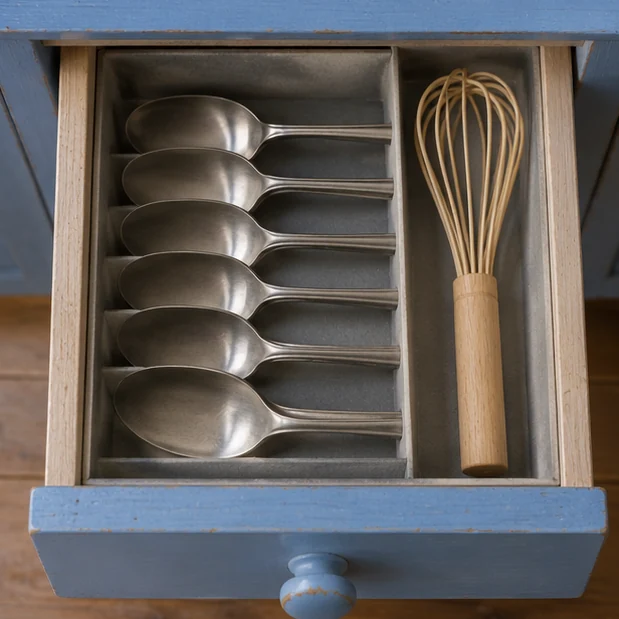 AI-generated use illustration · organising cutlery
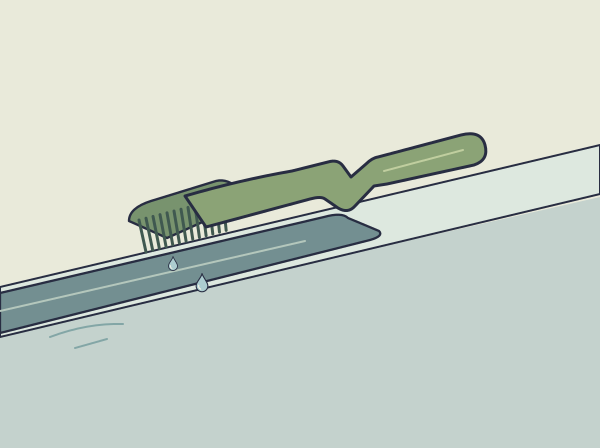 Product diagram
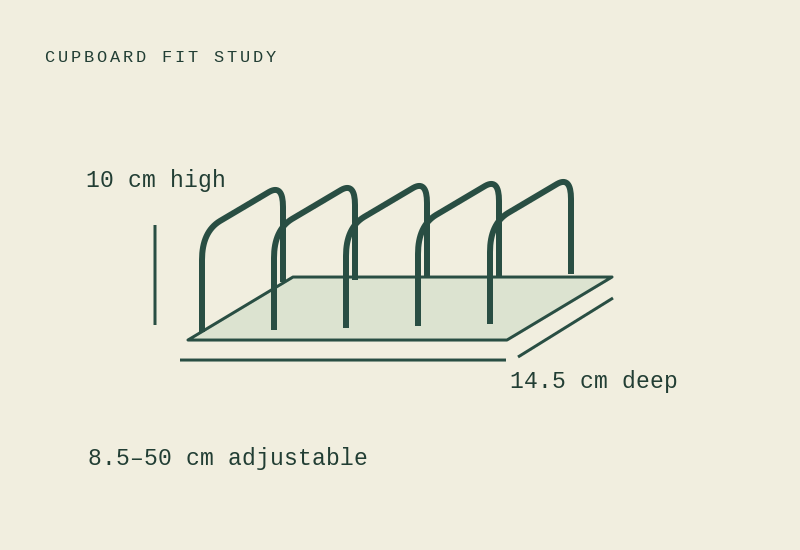 Product diagram
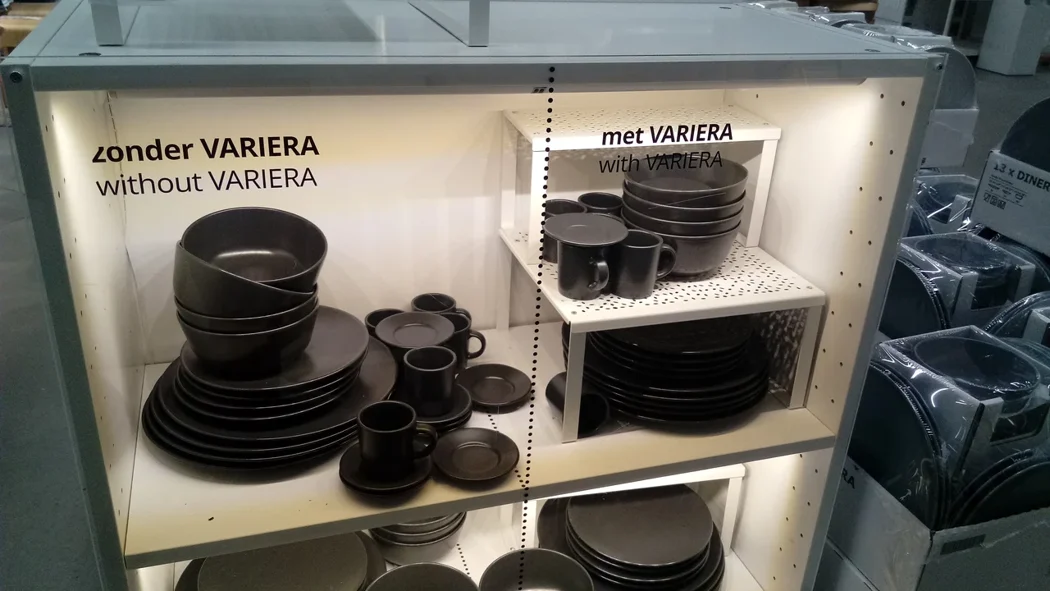 Retail display showing two shelf depths
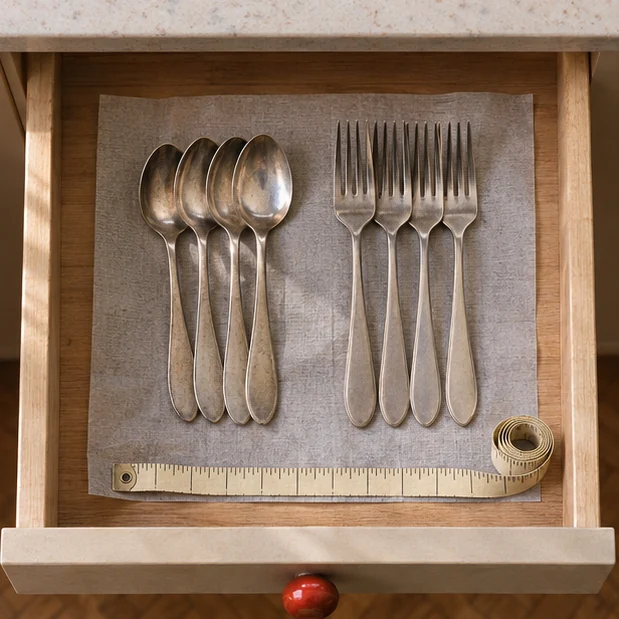 AI-generated use illustration · drawer storage
Use what you own Try a mug for the cooking spoons and an empty shallow box as a cutlery divider.
Buy for one measurement Choose a tray or a shallow shelf only for the particular spot you mapped. Include the clearance needed to lift things out.
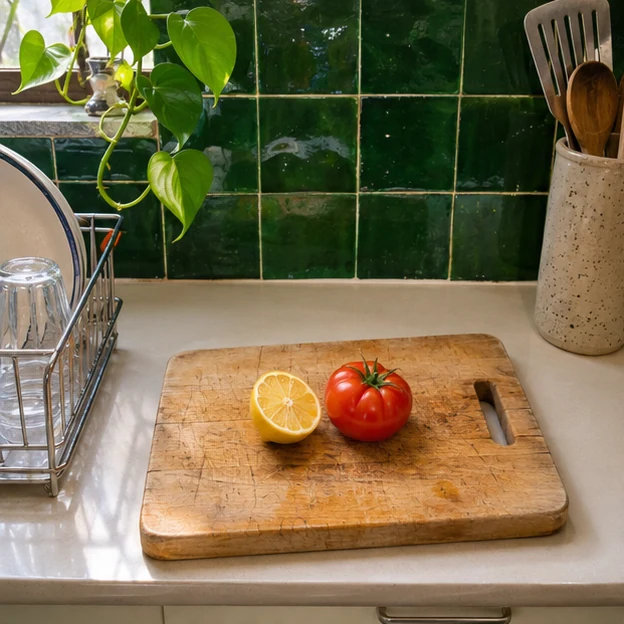
Lay your biggest chopping board where you like to prep dinner. Move everything underneath its outline. That rectangle is the patch worth protecting.
Leave your chopping board where it will be used and open the cupboard or drawer directly under it. Can you reach the pan or spice tin without lifting the board? Move the first thing you need while cooking to the next accessible shelf. Try that swap for one dinner.
Set the rolling board and pin down together and make one full stroke with the pin. Pull the flour container towards you and leave a spot for the next round. For a packed lunch, lay out the open tiffin tiers and their lids before filling them. These two meals need different shapes of clear space.
From this discovery